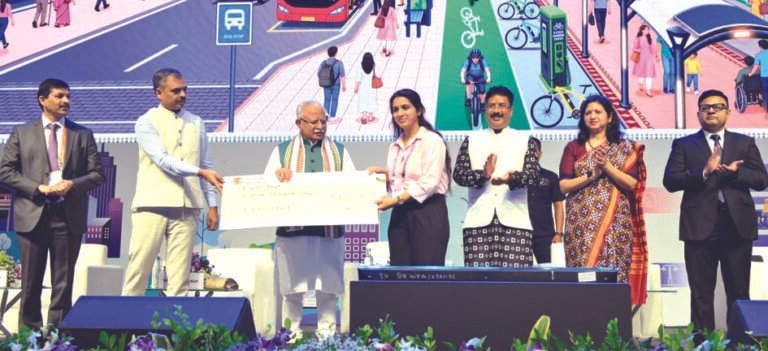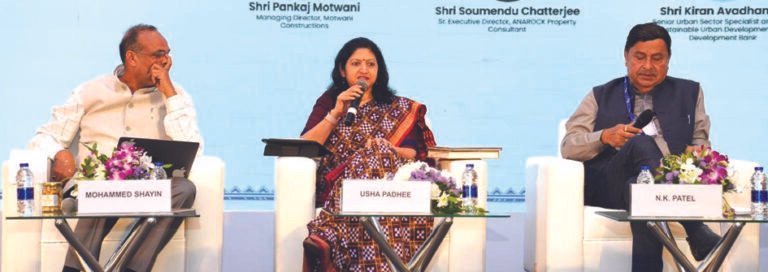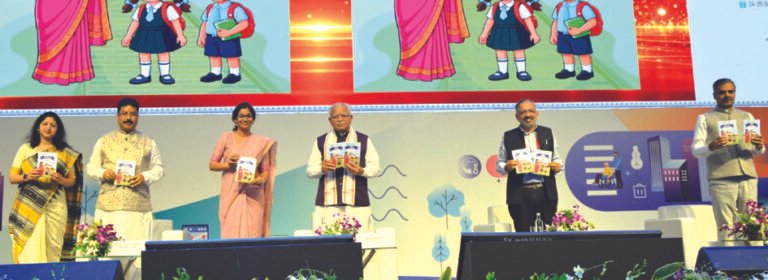
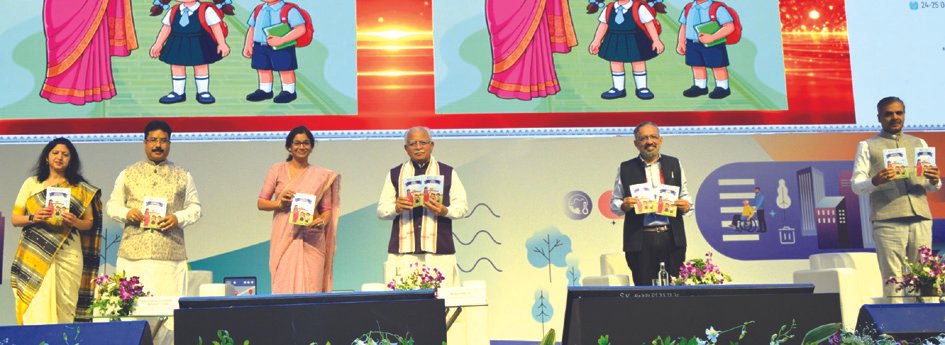
Bhubaneswar: National Urban Conclave 2026 concluded in Bhubaneswar with actionable recommendations to strengthen urban governance, planning and service delivery towards Viksit Bharat 2047. The closing ceremony was graced by Manohar Lal, Union Minister of Housing and Urban Affairs, Dr. Krushna Chandra Mahapatra, Minister of Housing and Urban Development, Odisha, Rajiv Gauba, Member, NITI Aayog, Satendra Singh, Secretary, Department of Urban Development, Ministry of Housing and Urban Affairs and Usha Padhee, Additional Chief Secretary, Housing and Urban Development, Govt of Odisha.
Delivering the closing remarks, Manohar Lal, Union Minister of Housing and Urban Affairs reflected on India’s historical urban development trajectory and the Government of India’s continued efforts to strengthen urban infrastructure and services.
Stating that “the intent of the Conclave is to deliberate on the future challenges of our cities”, he highlighted the progress achieved through national missions, including AMRUT, Swachh Bharat Mission–Urban and PM SVANidhi, in expanding water and sanitation services, improving waste management, strengthening urban mobility and promoting financial inclusion.
He emphasised the importance of affordable housing near employment centres and public transport, circularity in construction practices, and the scientific remediation of legacy waste. Noting that over half of the country’s legacy waste has been remediated, he stressed the need to sustain these efforts and prevent the accumulation of new waste, ensuring that India’s urban transformation remains inclusive, sustainable and future-ready.
Delivering the welcome address at the valedictory session of the National Urban Conclave 2026, Satendra Singh, Secretary, Department of Urban Development, Ministry of Housing and Urban Affairs, reflected on the key outcomes of the seven technical sessions and emphasised the need to translate policy deliberations into practical, implementable urban solutions. He noted that “success should be measured by the quality of services, not merely by project completion”, an indication of the importance of strengthening institutional capacity, inter-agency coordination, municipal finances and accountability to improve service delivery.
Highlighting the spirit of cooperative federalism, he reaffirmed the Ministry’s commitment to working with states, cities and partner institutions to take forward the Conclave’s recommendations, and advance the vision of Viksit Bharat 2047.
Delivering the special address,, Rajiv Gauba, Member, NITI Aayog emphasised the need for comprehensive reforms in urban governance, planning and municipal finance to manage India’s accelerating urban transition. Stating that, “we cannot run cities from our state capitals. We need to empower our smaller cities”, he called for greater devolution of powers and finances to urban local bodies, empowered city leadership and stronger municipal accountability.
He stressed the importance of strengthening own-source revenues, reforming conventional land-use planning and promoting higher densities, mixed-use development and transit-oriented development to improve housing affordability and economic productivity.
Highlighting initiatives such as the Urban Challenge Fund and City Economic Regions, he urged states to undertake structural reforms and called for linking funding under national urban missions to their implementation, enabling cities to realise their potential as engines of growth towards Viksit Bharat 2047.
The second and concluding day of the National Urban Conclave 2026 focused on translating policy deliberations into actionable recommendations for strengthening urban governance, planning, infrastructure and service delivery.
Building on discussions across seven technical sessions, the Conclave brought together representatives from the Union and State Governments, urban local bodies, industry, academia and knowledge institutions to identify practical solutions for India’s evolving urban challenges and advance the vision of Viksit Bharat 2047.