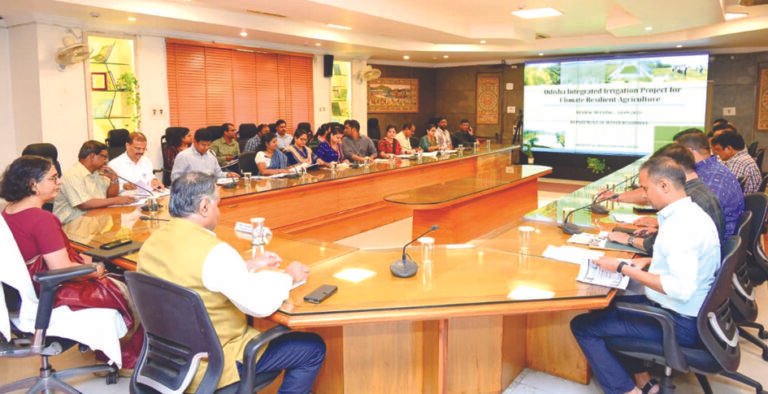
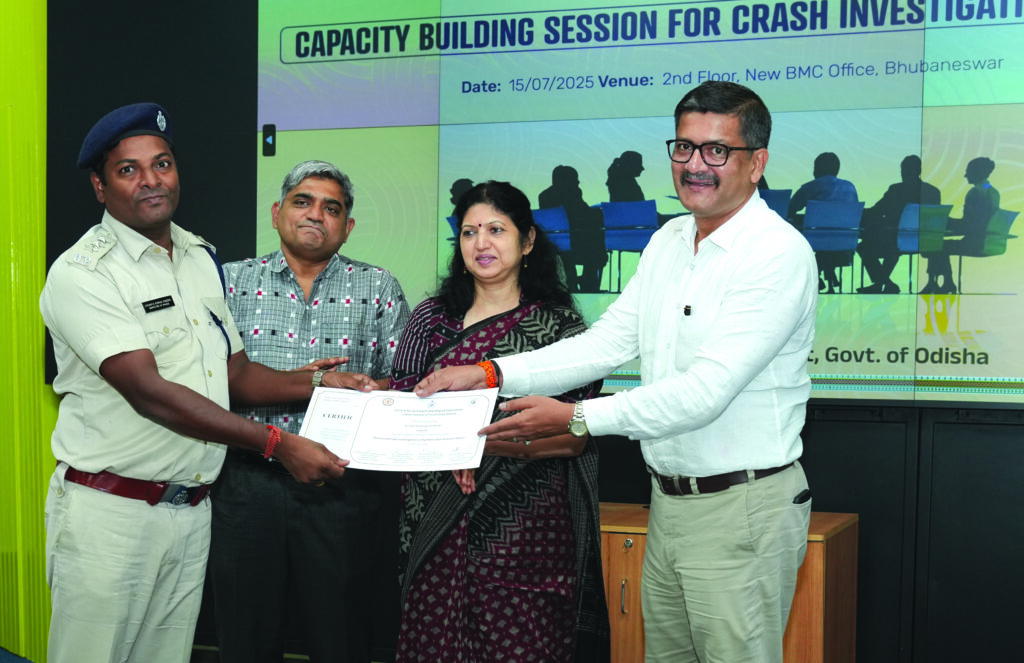
Bhubaneswar: In a significant stride towards enhancing road safety, the Commerce and Transport Department, Government of Odisha, in collaboration with IIT Madras, organized a comprehensive Capacity Building Session for crash investigating officers. The session, held at BMC in Bhubaneswar, was attended by approximately 35 crash investigating officers from various districts, marking a concerted effort to equip them with advanced, data-driven investigation techniques.
The core objective of the session was to empower the investigating officers with the practical skills required to adopt a systems approach to problem-solving in crash investigations. A key focus of the training was the Root Cause Analysis Matrix (RCAM), a powerful tool designed for structured crash investigations. Officers were refreshed on their on-field data collection and analysis skills and were taught how to effectively communicate their hypotheses based on concrete evidence. This initiative aims to transition from traditional methods to a more scientific and systematic approach to crash analysis.
The workshop targeted several key outcomes, including a deep understanding of the RCAM methodology for structured crash analysis, encouraging the use of data-driven and scientific strategies for developing targeted interventions, and promoting knowledge sharing of best practices on design thinking to better understand the human factors contributing to road crashes. A crucial part of the training also involved improving the capacity of officers to perform thorough death audits.
The program was graced by the presence of distinguished guests, including Usha Padhee, Principal Secretary of the Commerce and Transport Department, and Amitabh Thakur, Transport Commissioner cum Chairman, State Transport Authority, Odisha. Their participation underscored the government’s strong commitment to road safety and its willingness to embrace innovative solutions.
Prof. Venkatesh Balasubramanian from IIT Madras, who served as the Resource Person, highlighted the significance of the RCAM methodology. He explained that “RCAM provides a structured methodology to investigate the root causes of a crash based on a 3M&E model. That is from the perspectives of Man (Human), Machine (Vehicle), Method (User Behaviour), Environment (Road). This methodology enables factual collection of human, vehicle and property damage data and perform evidence-based design of interventions for improving road safety.” His insights provided a clear framework for the officers to conduct their investigations with greater precision and effectiveness.
Highlighting the importance of this scientific approach, Principal Secretary, Commerce and Transport Department Smt. Usha Padhee emphasized the role of individual responsibility and consistent follow-up. “In every matter, consistent follow-up is crucial. Our behaviour plays a vital role, and we must remain mindful of it in all our actions. Each of us, as individuals, can contribute meaningfully to road safety. The department is always open to supporting innovative ideas that promote safer roads,” said Smt. Padhee, encouraging a collective and proactive approach to road safety.
Echoing this sentiment, Transport Commissioner Shri Amitabh Thakur congratulated IIT Madras for their noble initiative and stressed the importance of public awareness and accountability. “Increased awareness is key to reducing road accidents. If you witness overspeeding or overloaded passenger vehicles, take a moment to spread awareness in your own capacity. Every individual effort counts. Moreover, every road accident must be followed by a thorough and proper investigation to ensure accountability and prevention,” he stated, reinforcing the dual role of public vigilance and official diligence in preventing accidents.